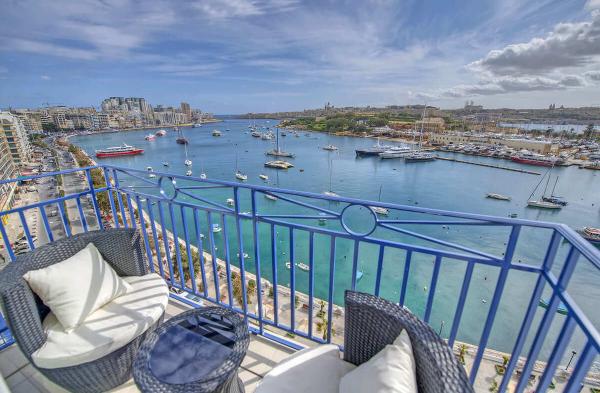
ℹ️ Short answer: Sliema is Malta’s most practical base — walkable seafront, ferry to Valletta in 8 minutes, every restaurant and cafe at hand. St Julian’s is the dressier neighbour. Paceville within St Julian’s is the nightclub strip and the right answer for almost no traveller. The high-end picks are the Westin Dragonara Resort, Hilton Malta, Le Méridien St Julian’s, AX Palace and The Hotel Phoenicia (Floriana, just outside Valletta). Mid-range: Hotel Juliani, Holiday Inn Express Sliema, Plaza Regency. Book seafront-facing rooms 8–12 weeks ahead in summer. Sliema and St Julian’s are where most Malta travellers actually sleep, and for good reason — between them they have 150+ hotels, every restaurant in the country in walking distance, the Sliema-Valletta ferry for sightseeing, and the Coast Road bus connections to everywhere else. The catch is that “Sliema and St Julian’s” is really four neighbourhoods stitched together, each with a very different sleeping experience: the Sliema seafront, inland Sliema (Tigné, Townsquare), St Julian’s Spinola Bay, and Paceville. Pick the wrong one and you’ll be 100m from a 04:00 nightclub bouncer when you wanted to be 100m from a quiet cafe.
ℹ️ Short answer: For most first-timers staying 3–7 days without a car, Sliema is the right base — it’s mid-priced, has the ferry to Valletta, the boat departures for Comino, and a thousand restaurants. Pick Valletta if you want to be inside the postcard and you’re OK paying 30–40% more for a smaller room. Mellieħa wins for families who want a beach. Mdina or Three Cities (Birgu) wins for a quieter, more romantic stay. Paceville is for nightlife only — avoid otherwise. Skip Buġibba unless your priority is a budget package deal. Malta is small — 27 km long — so wherever you stay, you can reach the rest of the island in under an hour. That sounds liberating until you realise it means every hotel claims it’s “perfectly located,” and the actual differences between neighbourhoods are about vibe, transport convenience, and price-per-square-foot rather than distance to the sights.
ℹ️ Short answer: From Malta International Airport (MLA, Luqa) you’ve got four sensible options for getting to Valletta, Sliema or St Julian’s. The cheapest is the Tallinja X-bus (€2.50 summer / €1.50 winter, 25–45 min). The fastest with luggage is Bolt or eCabs (€15–22, ~20 min). The least stressful at 1am with kids is a pre-booked private transfer (€25–40, driver waits at arrivals with your name). Skip the rental car for at least your first day — Valletta and Sliema are not where you want to learn Maltese parking. Malta International Airport sits in Luqa, about 8 km south of Valletta, 10 km from Sliema and 12 km from St Julian’s. The whole island is small enough that no transfer takes more than 45 minutes, but the right transfer depends entirely on what time you land, how much luggage you’ve got, and whether you’ve already had three espressos or zero hours of sleep.
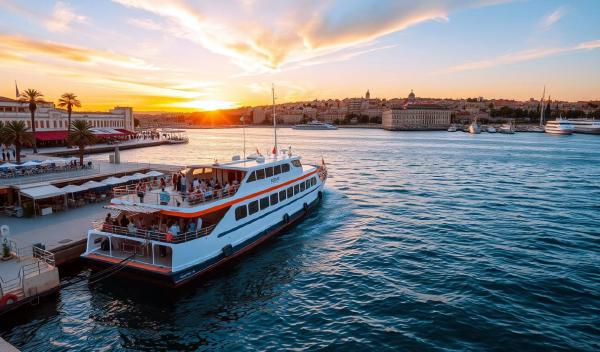
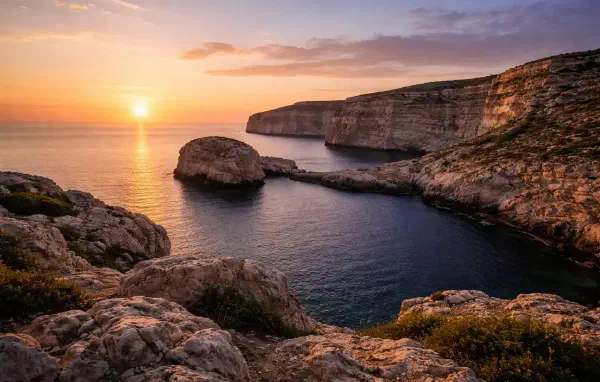
ℹ️ Short answer: For most couples and small groups, a 2.5-hour small-group sailing yacht sunset cruise from Sliema (€55–75) is the best pick — less hen-party energy than the big catamarans, more atmosphere than a RIB, with proper drinks and a real sail. Big catamarans (€35–50) are fine if you’re a group of friends who want a party deck and an open bar. Grand Harbour sunset cruises (€25–40) are the cheap, short, photogenic option and the right pick if you only have one evening. Skip private charters under 6 people — the per-person maths doesn’t work. The Maltese sunset is the easiest “wow” in your trip. The whole western coast is limestone cliff and bastion wall, the sun sinks straight into the sea between Comino and Gozo, and on a clear July evening you’ll watch a thousand-year-old skyline turn pink for forty minutes. You can see it from the Upper Barrakka Gardens for free, and you should at least once. But the boat-borne version — drink in hand, Comino on the horizon, Valletta lit up behind you — is one of those tourist clichés that earns its cliché status.