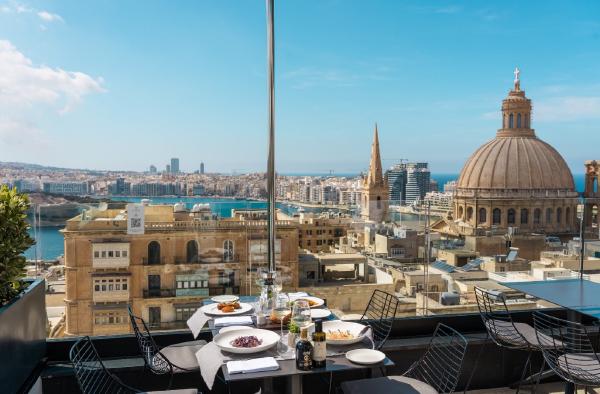
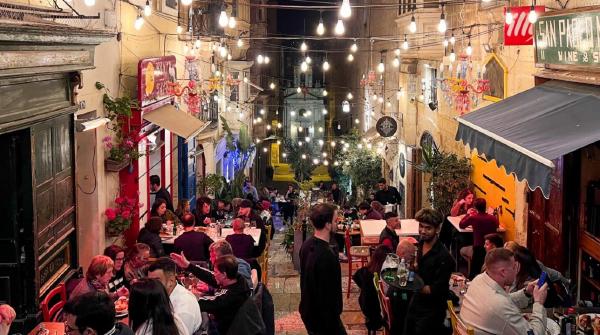
ℹ️ Short answer: For most first-timers, Legligin for slow Maltese tasting (€35–55pp), Trabuxu Wine Bar for small plates and Maltese wine, and Nenu the Artisan Baker for a proper ftira lunch are the three Valletta restaurants worth booking. Noni and Caviar & Bull are the fine-dining picks (€80–130pp). Strait Street is where most evening eating happens; Republic Street is where the historic cafes live. Skip hotel-restaurant generic Mediterranean — Valletta is small enough that the working restaurants are 5 minutes from anywhere. Valletta is small. About 1km long and 600m wide, with maybe 80 restaurants and another 50 cafes and bars packed in between. The good news: the best ones are mostly local, mostly affordable, and walkable to from any Valletta hotel. The bad news: there are a fair number of “international Mediterranean” tourist traps with English menus on Republic Street that will sell you a €22 spaghetti carbonara that lives in a microwaveable form. This guide picks the restaurants that are worth your evening, broken down by what kind of meal you actually want.
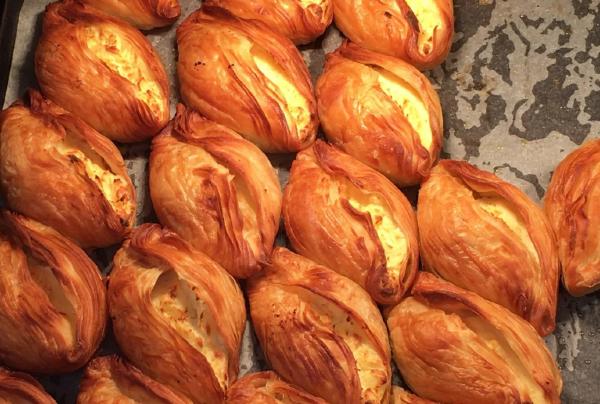
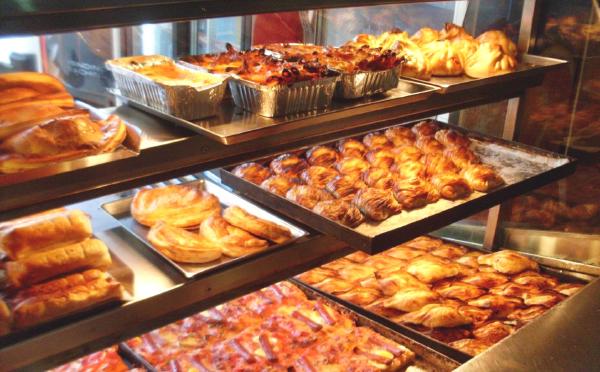
ℹ️ Short answer: The best pastizzi in Malta cost €0.50 each, are sold from holes-in-the-wall with no seating, and are best eaten at 09:00 standing up with a coffee. Crystal Palace in Rabat is the legendary one. Serkin (Crystal Palace’s neighbour, also Rabat) is the local rival. Maxim’s in Sliema is the convenient city pick. Pastizzeria Tal-Lord (Buġibba) is the north-coast classic. Anything sold for over €1 in a tourist-zone cafe is overpriced — the same pastizzo costs €0.50 a 5-minute walk away. There are food cultures where the best version of the national dish is in a 3-Michelin-star tasting room. There are food cultures where it’s in your aunt’s kitchen. Malta’s national dish — the pastizzo — is firmly in the third category: a 50-cent pastry from a hole in the wall in Rabat, eaten standing up at 09:00 with a coffee, in a queue of construction workers and pensioners.
ℹ️ Short answer: Maltese food is a 5,000-year layer cake — Phoenician fish, Arab spices, Sicilian pasta, North African pulses, British pies, all eaten on the limestone of a tiny island that taught itself to grow tomatoes the size of fists. The 15 dishes below are the ones to actually order: pastizzi, ftira, hobż biż-żejt, bigilla, fenek, lampuki, aljotta, bragioli, ravjul, kapunata, qaqocc mimli, kannoli, imqaret, prinjolata, and the Gozitan ftira (different from Malta’s). Skip the “international Mediterranean” hotel menus and stick to small family restaurants and bakeries. A useful thing to know about Malta: the island has been conquered, gifted, ruled, and squatted on by Phoenicians, Carthaginians, Romans, Byzantines, Arabs, Normans, Sicilians, the Knights of St John, French Napoleonic forces, and the British Empire — usually in that order, sometimes overlapping. Each one left ingredients, techniques, or whole dishes behind. The Maltese kept what worked.
ℹ️ Short answer: For most first-timers, a 3-hour Valletta food walking tour (€55–70) is the right single-tour pick — pastizzi, ftira, bigilla, Maltese wine, and a sweet stop in one organised loop. Cooking classes (€85–110) are the best second food experience if you’d rather make than eat. Sunday Marsaxlokk fish-market tours are the niche pick if your trip lands on a Sunday and you like seafood. The DIY version of any food tour is genuinely good and roughly half the price — but you lose the context, and Maltese food without context is just sandwiches. Maltese food is one of the surprises of a first Malta trip. People come for the limestone and the sea and end up texting friends about a 50-cent pastizzo from a Rabat hole-in-the-wall. The cuisine itself is a 5,000-year old layer cake — Phoenician fish, Arab spices, Sicilian pasta, Norman bread, North African pulses, British pies, Italian everything-since-1530 — and unlike the architecture, it doesn’t survive walking past it. You have to eat it.
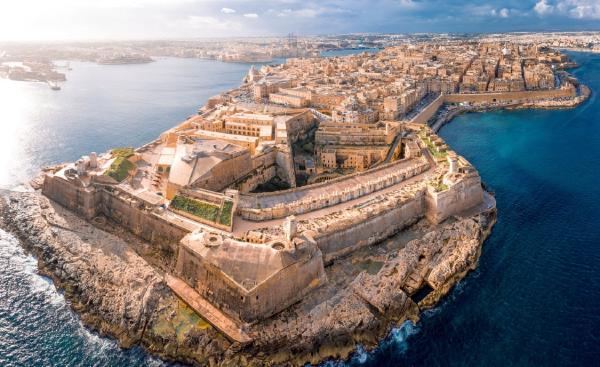
ℹ️ Short answer: For most first-timers, a 2.5-hour paid small-group walking tour (€25–35) is the best single-tour pick — it covers St John’s Co-Cathedral, the Barrakka Gardens, the Knights of St John backstory, and the bits of context that turn “old building” into “ah, so that’s why”. Free tip-based tours are genuinely good and can save you €20 if you’re on a budget. Skip private tours unless you’re 4+ people. The food tour is the one to add as a second tour. Self-guided with an audio app works if you want to move at your own pace. Valletta is small — about 1 km long and 600 m wide — and you can cross it end-to-end in 25 minutes. Which means you don’t need a tour to see it. You need a tour to understand it. Most of what makes Valletta special isn’t the surface (although the surface is gorgeous); it’s the layered history of the Knights of St John, the Great Siege, the British Empire, the WWII Blitz that made it the most-bombed city on earth, and the fact that the whole walled grid was master-planned in the 1500s by an Italian engineer with a thing for grids.