Malta has a quietly strong reputation in European diving. Visibility is reliably 20–40 metres in summer, the sea between Malta, Gozo and Comino is sheltered enough that conditions are diveable 300+ days a year, and the rate of wrecks-per-square-kilometre is one of the highest in the Mediterranean — Malta has been at the receiving end of every major Mediterranean naval war for the last 2,500 years, and a few of the casualties got scuttled deliberately as artificial reefs.
This guide covers what to dive, what level it requires, where to base yourself, and which operators consistently come up well in the dive-community circles. It’s not a replacement for a proper dive briefing; treat it as a planning shortlist.
For wider Malta planning see 3 days in Malta, where to stay in Malta, and best Malta tours.
Some links below are affiliate links — they don’t change your price, and they help keep this guide running.
Why dive Malta?#
Three reasons:
- Visibility. Summer averages 25–35m, occasionally 40m+. Mediterranean-good, not Caribbean-great, but excellent for wreck and reef detail.
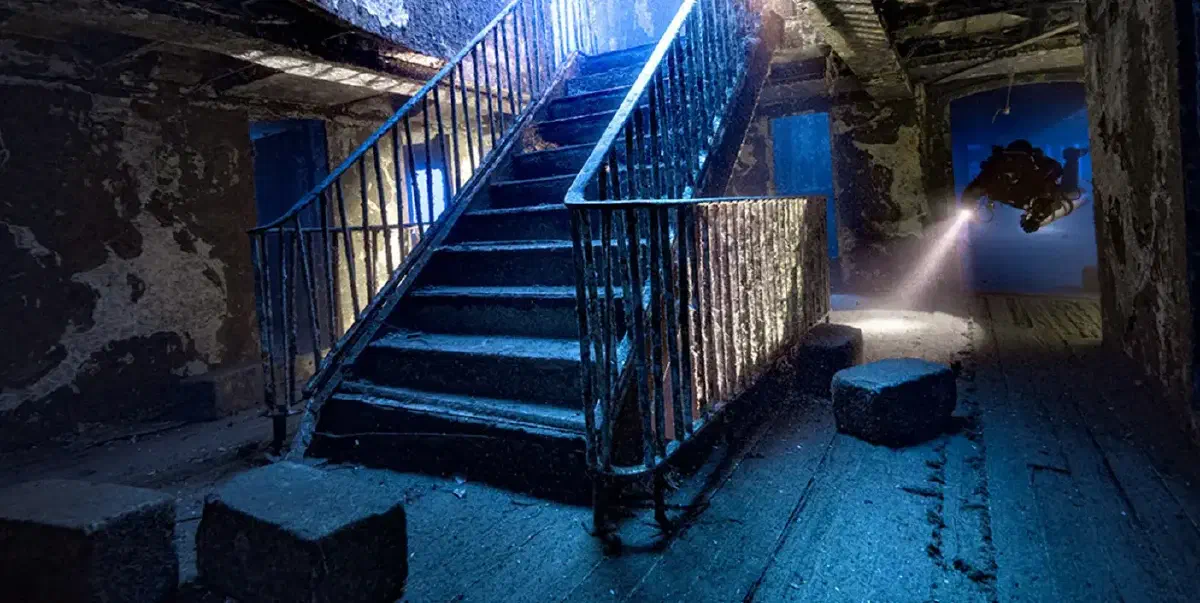
- Wrecks. The Um El Faroud (a 110m freighter scuttled in 1998 at 36m max), the P29 patrol boat (Ċirkewwa, scuttled in 2007 at 38m max), the HMS Maori (a Tribal-class destroyer, sunk in 1942, in Marsamxett harbour at 18m), the MV Karwela (Gozo, scuttled 2006 at 42m), and several smaller civilian and military wrecks.
- Variety in tight geography. A 30-minute drive gets you from a beginner shore site to a 40m wreck dive. Comino’s Crystal Lagoon, Gozo’s Blue Hole, Ċirkewwa’s reefs — all reachable from one base.
The honest counterpoints: summer water is warm but visible plankton blooms reduce vis in August, the Blue Hole/Inland Sea at Dwejra has gotten busier since the Azure Window collapse made it more famous, and boat-dive day rates are not cheap (€80–120 for a twin-tank).
Where to base yourself for diving#
| Base | Why |
|---|---|
| Buġibba / Qawra | The default — most operator HQs, walking distance to Ċirkewwa shore dives, easy ferry to Gozo |
| Sliema / St Julian’s | Convenient for HMS Maori and Marsamxett harbour dives; further from north-coast wrecks |
| Mellieħa | Quieter, sandy beach for non-diving family, 10 minutes to Ċirkewwa |
| Gozo (Marsalforn) | Best for Gozo-side dive trips: Blue Hole, MV Karwela, Reqqa Point, Cathedral Cave |
For a 5–7 day dive trip, 2 nights in Buġibba/Qawra + 3 nights in Marsalforn (Gozo) is the textbook split. See where to stay in Malta for accommodation options in each.
Beginners: Discover Scuba (no certification)#
A PADI Discover Scuba Diving (DSD) is the half-day “try-dive” — pool/shallow-water briefing, then a shore or shallow boat dive to ~12m max. No prior experience needed; minimum age 10. Great way to find out if diving is for you without a 4-day commitment.
Cost: €80–110 for a half-day, including all equipment, instructor, two short dives.
Best Discover Scuba sites:
- Ċirkewwa shore — a sheltered Y-shaped reef with clear water, easy entry. The training site of choice.
- Anchor Bay — protected, sandy, gentle slope; sometimes a pool session first.
- Inland Sea, Dwejra (Gozo) — only a short shallow swim, but suits “first dive ever” with the postcard backdrop.
PADI Discover Scuba Diving — Ċirkewwa Half-Day
Half-day intro for total beginners. Briefing + pool/shallow practice, then two open-water dives at the Ċirkewwa shore site to ~12m. All equipment included. Minimum age 10, no certification needed. If one of you is diving-curious and the other isn’t, this is the half-day that settles it.
Pick this if: you’ve never dived, you’ve got 4 hours free, and you’re curious. Around 70% of Discover Scuba divers in Malta book at least one more dive on the same trip.
Skip if: you’re prone to ear-equalisation problems (have you flown recently and felt pain?), you have severe asthma, or you can’t comfortably swim 200m without stopping.
Open Water Certification (4 days)#
The full PADI Open Water Diver course — internationally recognised, certifies you to 18m unsupervised — runs 3.5–4 days, €450–550 in Malta, all-in (theory, pool, 4 open-water dives, certification fee).
Why do it in Malta? The water is calm, the visibility is good, the operator scene is mature, and the price is comparable to Egypt or Indonesia without the long-haul flight. Plus you get to certify on real European wreck and reef dives.
What it includes: all theory + materials, pool training, 4 certification dives, equipment rental, instructor.
What it doesn’t: the certification card processing fee (~€40 paid separately to PADI), travel insurance with diving cover.
Pick this if: you’ve done 1–2 Discover Scuba dives and want to certify; you’ve got 4 days you can commit; you want to dive future trips at proper recreational levels.
Skip if: you’re only in Malta for 5 days and want to see other things — the course will eat your trip.
Best dive sites for certified divers#
The headline wrecks and reefs, by level:
Open Water (18m max)#
- Ċirkewwa Reef and Arch — the classic Malta beginner-to-intermediate shore dive. Reef wall, swim-throughs, vis 25–35m. One of the best shore dives in the Mediterranean.
- HMS Maori, Marsamxett Harbour — a WWII Tribal-class destroyer at 18m max, sunk in 1942. Hull broken open enough that swim-throughs are accessible at OW level (with proper guide).
- Anchor Bay (Popeye Village) — sheltered, sandy, gentle slope, good for skill drills.
Advanced Open Water (30m max)#
- Um El Faroud — the 110m Libyan-flagged freighter scuttled 1998 off Wied iż-Żurrieq at 36m max (top of bridge at 18m). Among the top-3 wreck dives in the Mediterranean.
- P29 Patrol Boat, Ċirkewwa — scuttled 2007 at 38m max, top deck at 18m. Penetrable in parts. Pairs naturally with the Ċirkewwa reef.
- Inland Sea + Cathedral Cave (Dwejra, Gozo) — a swim-through tunnel from the Inland Sea through to the open coast, ~30m max depth in places. Spectacular when visibility is good.
- MV Karwela (Gozo) — passenger ferry scuttled 2006 at 42m max, with shallow penetration possible at 28–32m.
Tec or experienced#
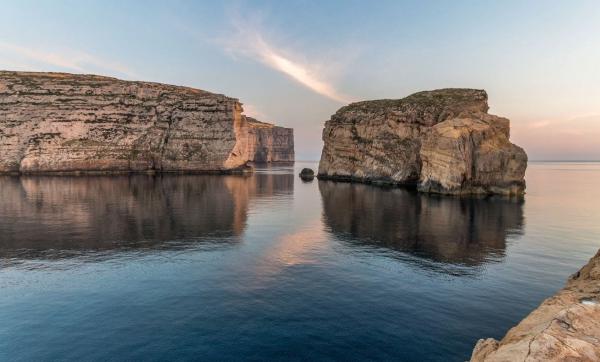
- Blue Hole + Azure Reef (Dwejra, Gozo) — the famous Blue Hole drops vertically to ~25m before opening into the open Mediterranean via an arch. The collapse of the Azure Window in 2017 changed the topography but didn’t ruin the dive.
- HMS Stubborn (S-class submarine, ~58m) — tec-only depth, dive-permit and tec certification required.
- HMS Hellespont, Schnellboot S-31, and other 30m+ wrecks — most are advanced or tec depending on operator.
A typical certified-diver Malta dive day#
What a guided two-tank day looks like with a Maltese operator:
- 08:00: check-in at the dive centre (Buġibba or Sliema), kit check
- 08:30: depart for first site by minibus or RIB
- 09:30: first dive (~45 min, max ~30m)
- 10:30: surface interval — coffee, biscuits, write up logbook
- 11:30: second dive (~40 min, max ~25m)
- 13:00: back at the centre, clean up, lunch on your own
- Evening: free, but don’t fly within 24 hours — last dive day must be at least 24 hours before your flight.
Cost: €80–120 for a guided two-tank boat day, including weights and tanks. Equipment rental adds €15–25 if you don’t have your own.
Best Malta dive operators#
Without naming specific competing brands (and to stay honest), here’s what to look for:
- PADI 5 Star IDC Centre rating — means active instructor development, well-maintained gear
- Years operating in Malta — 10+ years is a good sign of stability
- In-house RIBs and dedicated dive boats — better than chartering operators
- English-speaking instructors — universal in Malta but worth confirming
- Group sizes capped at 4:1 or 6:1 for guided dives — bigger groups are less safe and less enjoyable
The dive-community consensus picks consistently rank operators based in Buġibba, St Paul’s Bay, Sliema, Marsalforn (Gozo), and Xlendi (Gozo). Ask on the ScubaBoard or Reddit r/scuba for current recommendations — the operator landscape shifts every couple of years.
When to dive Malta#
| Month | Conditions |
|---|---|
| Jan–Mar | Cold (15–17°C water), best visibility (40m+), but a 5/7mm wetsuit minimum |
| Apr–May | Water 16–18°C, visibility excellent, fewer divers |
| Jun–Jul | Sweet spot — water 21–24°C, vis 25–30m, full operator schedules |
| Aug | Warmest (26–27°C) but plankton blooms drop vis to 15–20m |
| Sep–Oct | Best overall — warm water (24–25°C), vis improving, fewer crowds |
| Nov–Dec | Water 19–22°C, fewer operators running, beautiful empty sites |
The honest sweet spot: late September to mid-October. Water is warm, visibility recovering from August plankton, fewer divers, prices easing. April–May is the runner-up.
For wider season planning see best time to visit Malta and the off-season specifics in Malta in winter.
What it costs#
| Item | Cost |
|---|---|
| PADI Discover Scuba (half-day) | €80–110 |
| Single guided shore dive (certified) | €40–55 |
| Two-tank boat dive day | €80–120 |
| Six-dive package | €260–340 |
| Ten-dive package | €380–490 |
| Equipment rental (full kit) per day | €20–30 |
| PADI Open Water Diver (4 days, all in) | €450–550 |
| PADI Advanced Open Water (2 days) | €280–380 |
| PADI Wreck Specialty | €280–350 |
| Nitrox fills (per tank) | €5–8 extra |
For a 5-day dive trip with 8 dives + accommodation + food, a certified diver in Malta lands around €1,400–1,800 per person in shoulder season, before flights.
For wider trip-cost picture see Malta travel costs.
What to bring (and what the operators provide)#
Bring from home:
- Mask (operator masks fit notoriously poorly)
- Computer (own one if you have one — rentals are basic)
- Logbook
- Dive insurance (DAN Europe is the European standard)
- Reef-safe sunscreen
- Swimsuit, towel, drybag
Operator provides:
- BCD, regulator, fins, weights, tanks
- Wetsuit (3mm summer, 5/7mm winter)
- Boat transport, surface marker buoy
- Briefings, dive guide
A full personal kit from home saves the rental fees on a long trip — break-even is roughly 8–10 dives.
Combining diving with the rest of Malta#
Most divers who come to Malta dive 4–5 days and sightsee 2–3. A typical 7-day plan:
- Day 1: arrive, settle in Buġibba, easy beach
- Day 2: Discover Scuba half-day (or, if certified, Ċirkewwa shore + check-out dive)
- Day 3: two-tank boat day (Um El Faroud + Wied iż-Żurrieq)
- Day 4: ferry to Gozo, two-tank day (Blue Hole + Inland Sea + Cathedral Cave)
- Day 5: Gozo dive day (MV Karwela + Reqqa Point) or sightseeing day (Citadel + Ramla)
- Day 6: rest day (mandatory 24-hour pre-flight) — Valletta, Mdina, food
- Day 7: flight home
For Gozo logistics see Malta to Gozo ferry guide and best Gozo day trips.
Insider tips#
- Book a 5–10 dive package up-front, not pay-per-dive. Saves 15–25%.
- Bring your own mask and computer — biggest fit-and-comfort difference, smallest pack volume.
- Avoid weekend mornings at Ċirkewwa shore site in August. It’s the busiest dive site on the island and gets crowded by 09:30.
- Get nitrox certified before coming if you’re not yet — nitrox is widely available in Malta and worth it for the longer bottom times on the deeper wrecks.
- The Um El Faroud’s stern section has propeller and rudder still intact and the bow has a swim-through corridor at 30m — book a guide who knows the wreck for your first descent.
- Don’t fly within 24 hours of your last dive. This is non-negotiable. Plan a non-diving last day.
- DAN Europe membership covers diving incidents Mediterranean-wide. ~€100/year, the best dive-trip insurance.
Common mistakes#
- Diving the Blue Hole in summer afternoon. It’s busy, surge can be tricky, and visibility drops in the afternoon. Morning dives are better.
- Booking deep wrecks (Um El Faroud, P29) without an Advanced Open Water cert. Operators won’t take you below 18m on OW alone. Get the AOW first or come back.
- Forgetting the 24-hour pre-flight rule. Many divers learn this the hard way. Plan a non-diving last day.
- Skipping insurance. Maltese diving is safe but accidents happen; DAN Europe or equivalent dive insurance is mandatory in practice.
- Trying to dive every day for 7 days. You’ll burn out and risk decompression. One rest day in 5 is the standard. Use it for Mdina, Valletta or food.
- Booking the cheapest operator without checking equipment age. Rental BCDs and regulators that aren’t service-stamped recently are a real risk. Pay €5–10 more for a reputable operator.
- Dismissing summer plankton. August in particular drops vis to 15–20m at some sites. Plan around it (deeper wrecks, dawn dives).
FAQ#
Is Malta a good place to learn to dive?#
Yes — calm sheltered water, warm summer sea, mature operator scene, English-speaking instructors. PADI Open Water certification in Malta runs €450–550 over 4 days, comparable to Greece or Cyprus and cheaper than the UK. The Ċirkewwa training site is one of the best beginner spots in the Mediterranean.
What’s the best dive site in Malta?#
Um El Faroud for wreck divers (Advanced Open Water needed), Ċirkewwa Arch and reef for any level, Blue Hole at Dwejra (Gozo) for atmosphere. Most divers’ top-3 includes all three.
Can I dive in Malta in winter?#
Yes, year-round — water is 15–17°C in January–March, but visibility is at its best (40m+). You’ll need a 5/7mm wetsuit or a drysuit. Some operators reduce schedules but most run year-round.
How much does diving cost in Malta?#
€80–110 for a Discover Scuba, €80–120 for a guided two-tank boat day, €450–550 for full PADI Open Water certification (4 days). Equipment rental adds €20–30/day if you don’t have your own.
Do I need to be certified to dive in Malta?#
Not for Discover Scuba (half-day intro to ~12m), which is open to anyone 10+ with no medical issues. For independent or boat dives at depth, you need PADI Open Water (or equivalent) at minimum.
What’s the visibility like in Malta?#
25–40m in spring and autumn, 20–30m in summer (occasional plankton drops), 40m+ in clear winter conditions. Among the best Mediterranean visibility year-round.
Is the Blue Hole worth diving?#
Yes — it’s atmospheric and unique, with the vertical limestone shaft opening into the open sea via an arch at ~25m. The Azure Window collapse in 2017 changed the topography but the dive itself is still excellent. Best done morning, calm weather only.
How long do I need in Malta for a dive trip?#
5–7 days, with 4–5 dive days plus 1 mandatory pre-flight rest day. Less than 4 days isn’t worth the travel for most divers; longer than 10 days, you’d want to add a different dive destination or shift to non-diving exploration.
Can I combine diving with a non-diving partner’s holiday?#
Easily. Buġibba and Mellieħa are excellent family-and-non-diver bases — beaches, restaurants, day trips while you dive. The non-diver can do Comino cruise, Mdina, Valletta day-trips while you dive Ċirkewwa or Gozo. See Malta with kids for non-diving family planning.
Is Malta diving better than Cyprus or Greece?#
Different. Malta has more wrecks at recreational depths and better visibility on average; Cyprus has the Zenobia (one of the world’s top wrecks); Greece has more reef variety. Most Mediterranean divers rate Malta in their top 3 European destinations alongside Greece and Croatia.
Last verified: April 2026. Operator schedules, dive site access and certification prices change — confirm with the operator before booking.